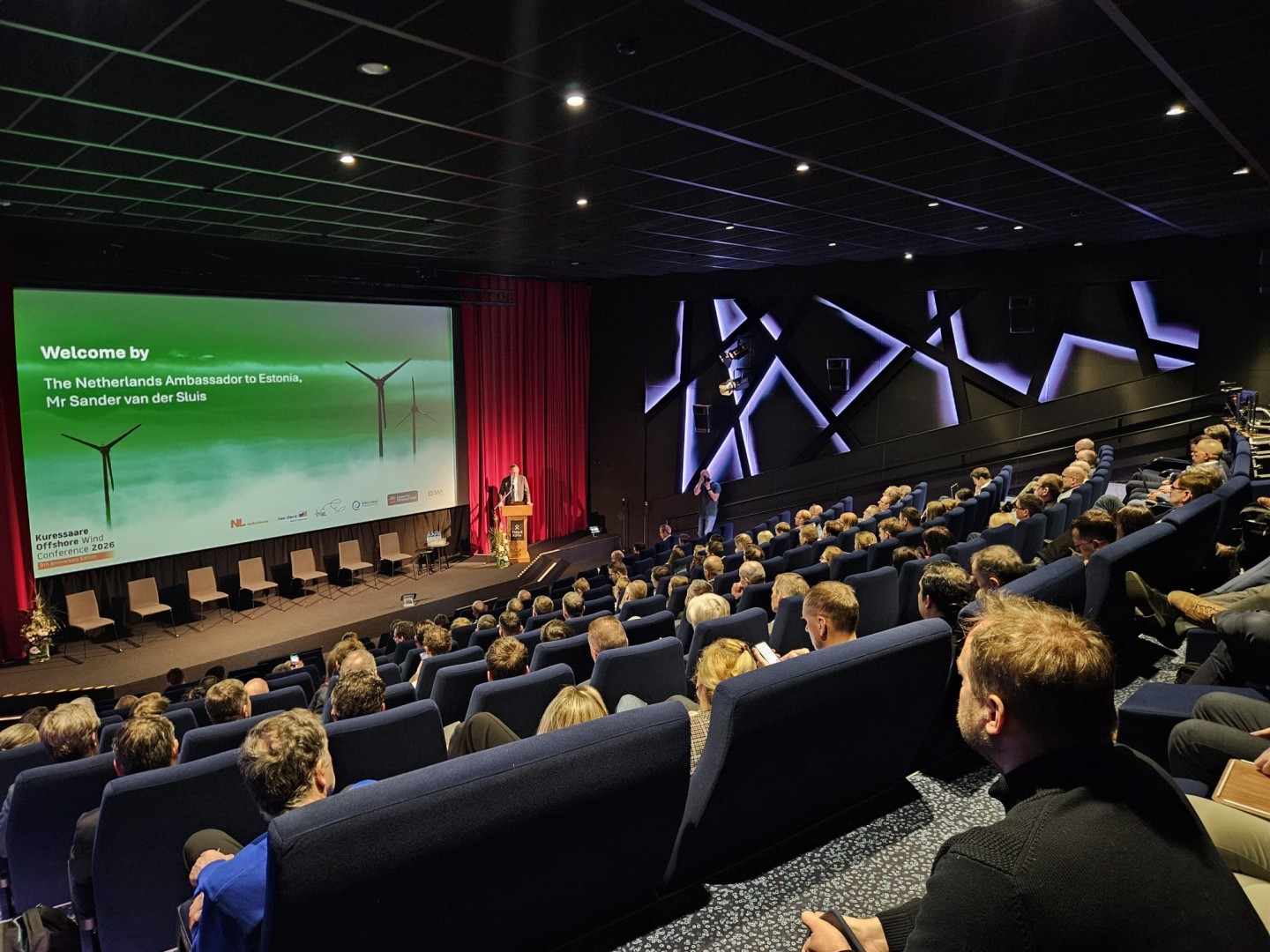
MARTE partner Saaremaa Development Centre co-organised the 5th Kuressaare Offshore Wind Conference 2026
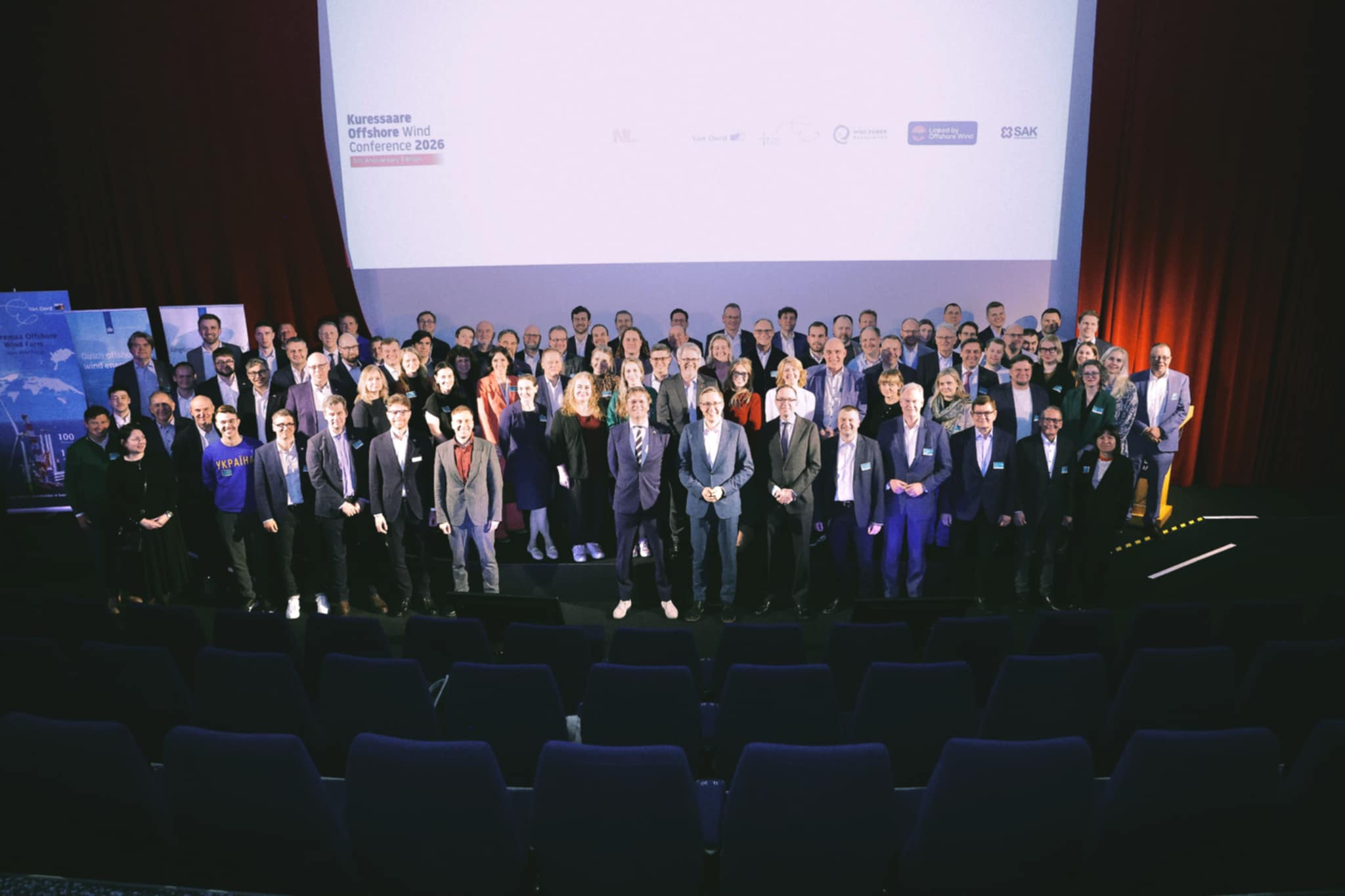
On 18 March 2026, the 5th Kuressaare Offshore Wind Conference brought together more than 140 participants in Kuressaare, Estonia. The event was co-organised by Saare Wind Energy & Van Oord, the Estonian Wind Power Association, and the Embassy of the Netherlands in Estonia, together with Saaremaa Development Centre (SAK) – a partner in the MARTE consortium.
From the MARTE consortium, representatives from Saaremaa Development Centre, Environmental Investment Centre, Tallinn University of Technology, and the Investment and Development Agency of Latvia took part in the conference. Tallinn University of Technology contributed to the programme with expertise on energy systems and offshore wind integration.
The conference brought together a broad mix of stakeholders across the offshore wind value chain – including offshore wind developers and energy utilities, technology and engineering companies, financial institutions, national regulators and ministries, transmission system operators, ports and maritime actors, research institutions (e.g. universities and research centres working on energy systems, engineering and maritime-related technologies), as well as regional development organisations and innovation support bodies.
With policy, industry and research perspectives in the same room, participants discussed offshore wind development from multiple angles. This reflects MARTE’s approach, where solutions emerge through collaboration between different stakeholder groups.
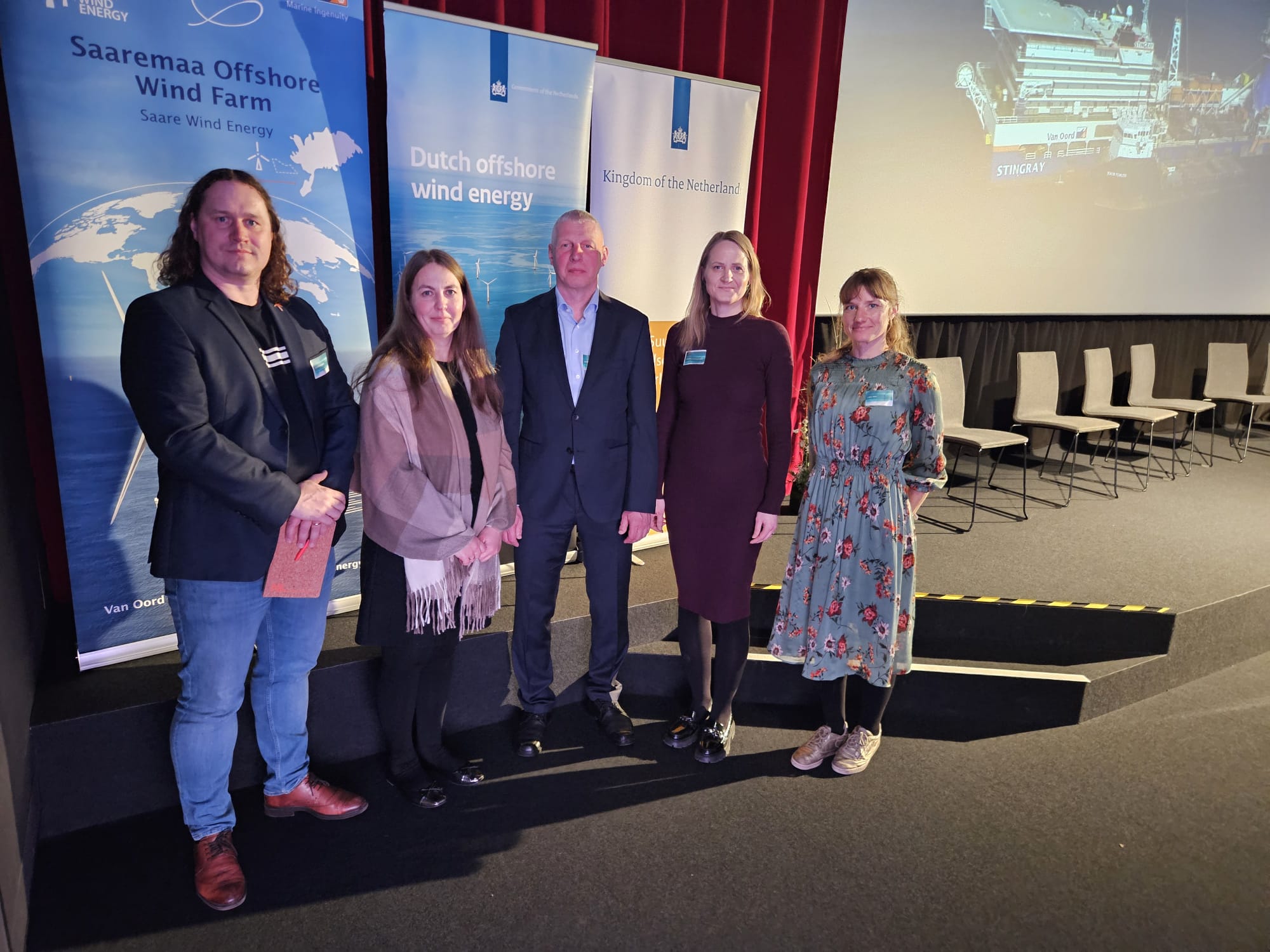
From right: Liina Tabri (Tallinn University of Technology), Kristel Oinberg-Kelder (Saaremaa Development Centre), Kuido Kartau (Saare Wind Energy), Tiina-Maria Araja (Environmental Investment Centre), and Rainer Paenurk (Saaremaa Development Centre).
Key discussion topics
The 2026 conference addressed key questions shaping offshore wind development in the Baltic Sea region, combining policy, market and technology perspectives:
-
Offshore wind development in the Baltic Sea – strategic outlook, regional cooperation and project pipeline development
-
Permitting and regulatory frameworks – how to streamline planning processes and provide clearer, more predictable conditions for developers
-
Environmental considerations and coexistence – improving impact assessment practices and balancing offshore wind with other sea users
-
Ports and infrastructure readiness – the role of ports, logistics and regional infrastructure in enabling large-scale deployment
-
Economic impact and investment climate – project feasibility, financing conditions and regional value creation
-
Subsea infrastructure protection and monitoring – increasing focus on securing offshore assets and cables, and developing monitoring and resilience solutions
The speaker line-up combined strategic and operational perspectives, from policymakers shaping national and EU-level frameworks to developers, grid experts and infrastructure specialists working on project delivery. This gave participants a clearer picture of how decisions move from policy and financing to implementation.
One of the topics in the programme was subsea infrastructure protection and monitoring in the context of offshore wind development. This is closely aligned with MARTE’s focus on marine technologies and monitoring solutions, highlighting opportunities for developing and applying solutions in subsea monitoring and infrastructure resilience.
Now in its 5th edition, the Kuressaare Offshore Wind Conference has become a regular meeting point for offshore wind stakeholders in the Baltic Sea region, offering MARTE a practical opportunity to follow regional developments, strengthen contacts and identify links between offshore wind and marine technology innovation.



Funded by the European Union under Grant Agreement ID 101186498. Views and opinions expressed are however those of the author(s) only and do not necessarily reflect those of the European Union. Neither the European Union nor the granting authority can be held responsible for them.